No products in the cart.
Tarot overview
Tarot cards on this website, designed with devotion and care by our team, are presented as one more tool to discover the need of the moment that is upon us. We consider them to be grounding tools for work on our inner world since the only moment when tarot can be used is the moment you are in right now, bringing you straight into the Now through pure synchronicity. This is the beauty of tarot but also a reason why it may drive us away from specific information, especially if we do not feel ready to deal with the message in front of us.
Short History Of Tarot Cards
The history of tarot cards is fascinating and spans several centuries. Here is a short overview of the history of tarot cards:
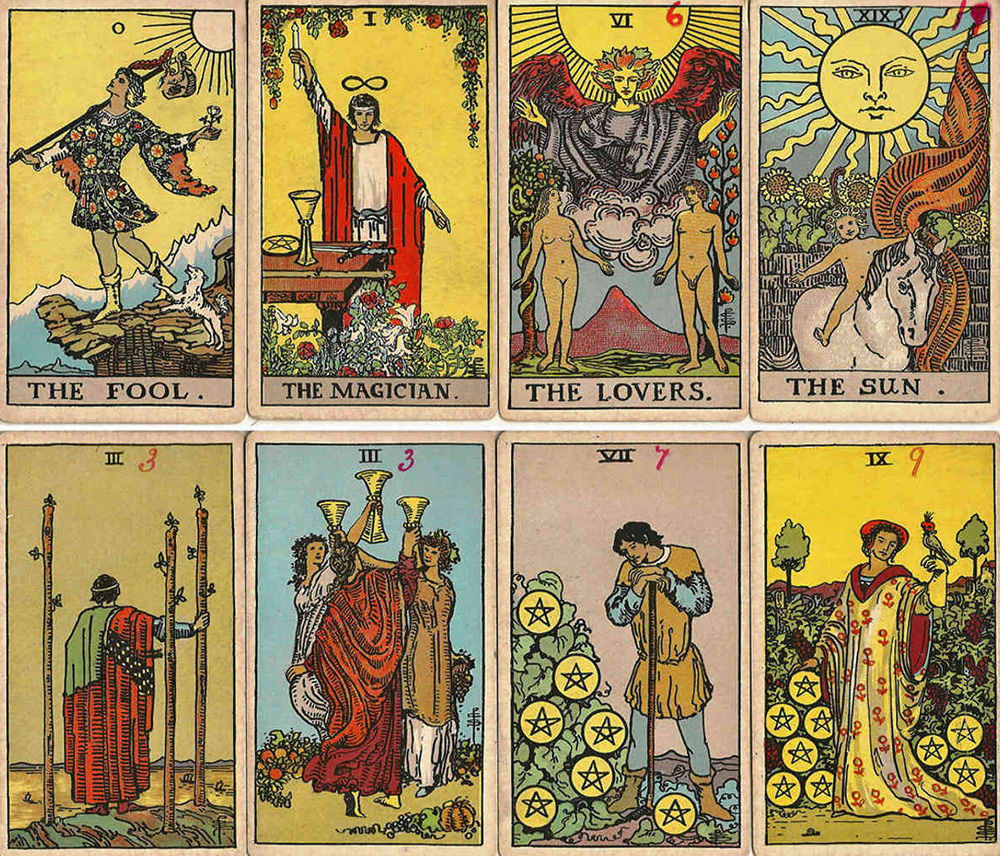
- Origins in Playing Cards: The origins of tarot cards trace back to the 14th century in Europe, primarily in Italy, where they were originally used as playing cards for games. These early decks had similar structures to modern playing card decks, with four suits (Cups, Swords, Coins/Pentacles, and Staves/Wands) and numbered cards.
- The Introduction of Tarot Trumps: In the mid-15th century, additional cards were added to the playing card deck, known as the Major Arcana, or tarot trumps. These cards depicted allegorical and symbolic scenes, typically ranging from The Fool to The World. It is believed that tarot trumps were initially used for card games and then later found spiritual and divinatory significance.
- Tarot as a Divinatory Tool: In the 18th and 19th centuries, the tarot began to be used primarily for divination and occult practices. Influenced by esoteric and mystical beliefs, tarot readers developed interpretations for the symbolism and imagery on the cards. This period saw the rise of various tarot decks with different artistic styles and interpretations.
- The Rider-Waite-Smith Tarot: In the early 20th century, the Rider-Waite-Smith (RWS) tarot deck was created by artist Pamela Colman Smith, under the guidance of occultist Arthur Edward Waite. This deck, known for its detailed illustrations and rich symbolism, became immensely popular and influenced subsequent tarot decks.
- Modern Tarot: In recent times, tarot has gained widespread popularity as a tool for spiritual guidance, self-reflection, and personal growth. Many artists and authors have created their own tarot decks, incorporating diverse themes, symbolism, and artistic styles. Tarot readings are now commonly done in person, online, and through various digital platforms.
It’s worth noting that the origins and early history of tarot cards are still debated, and several theories exist regarding their true origins and intended purposes. However, the use of tarot cards for divination and spiritual exploration has undeniably played a significant role in their evolution and cultural significance.
Origin of Tarot
The exact origin and early history of tarot cards remain somewhat mysterious and subject to debate among historians and scholars. While there is no definitive evidence to pinpoint their precise origins, there are a few prominent theories that shed light on the possible beginnings of tarot cards:
Playing Cards from the Islamic World: One theory suggests that tarot cards may have originated from playing cards brought to Europe through trade routes from the Islamic world during the late medieval period. These cards, known as Mamluk cards, featured suits similar to those found in tarot decks today and were used for gaming purposes.
Italian Renaissance and Courtly Entertainment: Another theory posits that tarot cards emerged in 15th-century Italy during the Renaissance. They were initially used as a form of entertainment at the courts of aristocratic families. The earliest documented evidence of tarot cards comes from a series of court records in Milan from the 1440s, where playing cards resembling tarot decks were mentioned.
Occult and Esoteric Influence: Tarot cards also became associated with mysticism, esoteric practices, and occult beliefs over time. Some believe that these influences shaped the symbolism and divinatory meanings associated with the tarot cards. In the 18th and 19th centuries, tarot decks were used as tools for occultists and esoteric practitioners, who viewed them as a means to access spiritual and hidden knowledge.
While the specific origins of tarot cards are not definitively known, it is generally agreed that 15th-century Italy played a significant role in their development. From their humble origins as playing cards, tarot cards have transformed into a popular tool for divination, self-reflection, and spiritual exploration. The symbolism and meanings associated with the cards have evolved over time, influenced by a variety of cultural, artistic, and metaphysical factors. Today, tarot cards continue to captivate and inspire individuals seeking guidance and insight into their lives.
Tarot and astrology
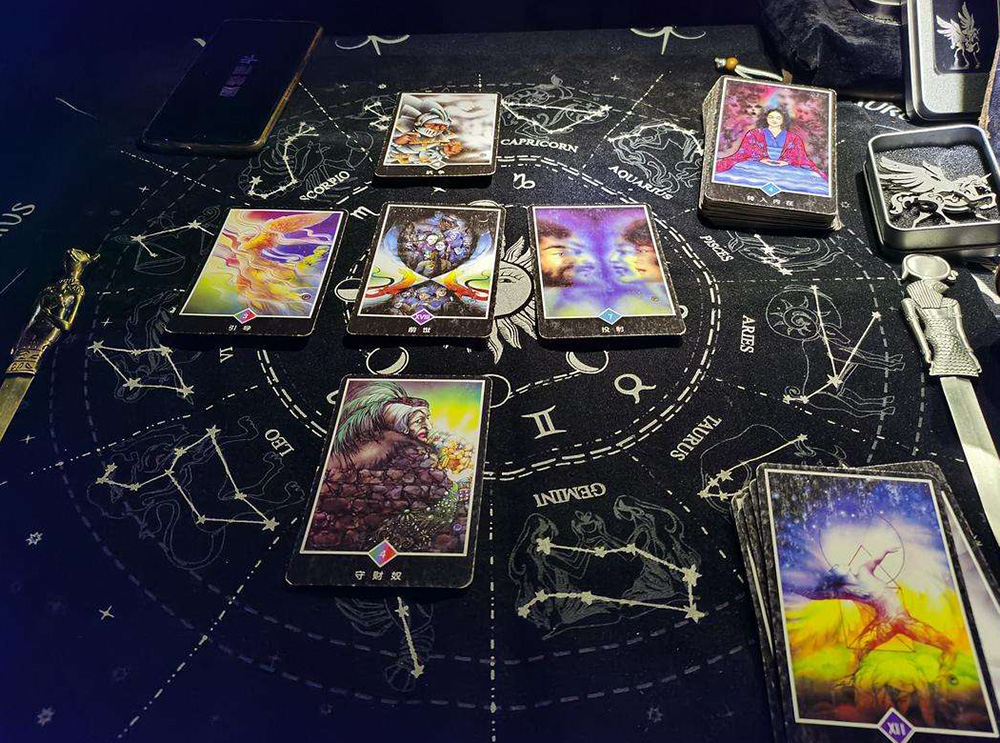
Tarot and astrology are two distinct systems of divination and metaphysical exploration. However, they can be complementary and used together to provide deeper insights and a more comprehensive understanding.
Astrology is the study of the celestial bodies and their positions and movements in relation to human affairs and personality traits. It utilizes birth charts, which map out the positions of the planets at the time of an individual’s birth, to provide insights into their personality, behavior, and potential life experiences.
Tarot, on the other hand, is a system of divination that utilizes a deck of cards with symbolic images and archetypes. It can offer guidance, self-reflection, and insight into various aspects of life, including relationships, career, and personal growth. The tarot deck consists of 78 cards, including the Major Arcana and Minor Arcana, each with its own symbolism and interpretation.
When tarot and astrology are combined, they can provide a deeper and more nuanced understanding of a person’s life experiences and potential. Here are a few ways they can be used together:
1. Astrologically-Timed Tarot Readings: The positions and movements of the planets can be taken into consideration during a tarot reading. For example, if a significant astrological event or transit is occurring, such as a Saturn return or a Jupiter transit, the tarot reading can be tailored to focus on the themes and energies associated with that specific astrological influence.
2. Astrological Correspondences in Tarot: Each tarot card can be associated with an astrological planet, sign, or element based on its symbolism. These correspondences can enhance the interpretation of the cards and deepen their meaning within a reading. For example, the Emperor card in the tarot can be associated with the zodiac sign Aries, reflecting themes of leadership, assertiveness, and ambition.
3. Using Tarot for Astrological Guidance: Tarot can be used as a tool to explore and gain insights into specific astrological placements or challenges in a birth chart. A tarot spread can be crafted to focus on a particular house, planet, or aspect within an individual’s birth chart, providing additional guidance and insights related to that specific astrological dynamic.
It’s important to remember that the interpretation and use of tarot and astrology can vary. Personal beliefs, practitioner preferences, and the specific system or tradition being followed can all influence how tarot and astrology are combined. By integrating these two powerful systems, individuals can gain a more holistic understanding of themselves, their life experiences, and their potential for growth and transformation.
Leave a Reply