No products in the cart.
The Devil
The Devil card in Tarot carries significant symbolism and often generates strong reactions. It is one of the major arcana cards, typically numbered XV, and it represents various themes and concepts.
In Tarot, the Devil card symbolizes bondage, illusions, materialism, and unhealthy attachments. It depicts a figure, often resembling a horned creature or a satyr, surrounded by two captives chained to its throne. This imagery suggests powerlessness, trapped in negative patterns, and being controlled by one’s own greed or desires.
The Devil card serves as a reminder of the darkness that exists within ourselves and the temptations that can lead us astray. It highlights the negative aspects of our own nature and encourages introspection, shadow work, and liberation from self-imposed limitations.
However, it’s important to note that interpretations of the Devil card may differ based on the specific Tarot deck or reader. Some interpretations view the Devil as a symbol of personal transformation, facing fears, and breaking free from societal constraints. It can be seen as a call to confront and overcome our own personal demons or addictions to achieve true liberation.
The history of the Devil card in Tarot is complex and spans centuries. The imagery and symbolism associated with it can be traced back to various religious, cultural, and mythological sources. In some traditions, the Devil is depicted as a representation of evil or an opposing force to divine and moral principles.
Overall, the Devil card in Tarot serves as a powerful symbol reminding us to confront our inner darkness, confront unhealthy patterns, and liberate ourselves from self-imposed limitations. It encourages self-reflection, self-awareness, and the pursuit of personal growth and transformation.
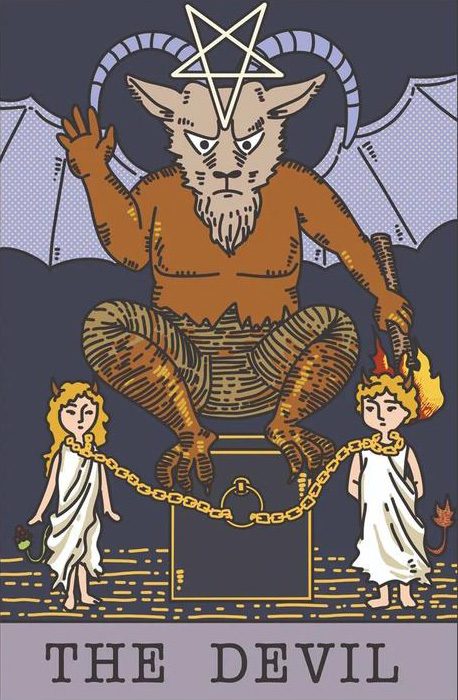
Tarot Card: The Devil
Planet: Saturn
keywords: Shadows, Curse, Instinctive, Animalistic, Cross of Matter
Affirmation: The Divine intent is my intent
Career of the Devil
In the context of Tarot, the phrase “Career of the Devil” may suggest negative or detrimental influences in one’s professional life. It implies a career path or choices that are driven by greed, materialism, or unethical practices.
However, it’s important to note that the Devil card in Tarot does not necessarily indicate an actual career associated with evil or malevolence. It symbolizes traits and behaviors that can hinder personal growth or lead to detrimental consequences.
If you are seeking guidance regarding your career and the Devil card has appeared in a reading, it may suggest the need for self-reflection and evaluation. Consider whether your current career goals or actions align with your values and morals. It could be an invitation to reconsider certain choices, break free from negative patterns, and pursue a more fulfilling and ethical professional path.
As with any Tarot interpretation, it’s crucial to consider the card as one part of a larger reading and reflect on its specific placement and surrounding cards for a more accurate understanding of its implications in the career context.
Love of the Devil
“Love of the Devil” suggests a romantic or affectionate connection with someone who embodies qualities associated with the devil or negative influences. It implies a potentially toxic or destructive relationship, characterized by manipulation, deceit, or harmful behavior.
It’s important to note that this phrase uses metaphorical language to describe a challenging and potentially damaging romantic situation. It does not necessarily imply a literal romantic involvement with a supernatural entity. Instead, it emphasizes the negative dynamics and potential detrimental effects of a particular romantic connection.
If you find yourself in a love situation that can be described as the “Love of the Devil,” it may serve as a warning to reevaluate the relationship and consider whether it is truly healthy and beneficial for you. It could be an invitation to prioritize your well-being and seek a more positive and nourishing love connection.
Health of the Devil
“Health of the Devil” refers to the state or condition of the devil’s health. In this context, it implies an assessment or discussion of the well-being, vitality, or physical condition of a supernatural being associated with evil or negativity.
However, it’s important to note that the concept of the devil’s health is purely speculative and based on mythological or religious interpretations. The idea of evaluating the health of a fictional or mythical character is not applicable in a literal sense.
If you are referring to the phrase metaphorically, “Health of the Devil” may suggest a negative or unhealthy state or condition. It could be used to describe something that is severely detrimental or harmful, such as an extremely toxic situation or environment.
It’s crucial to consider the intended context and meaning behind the phrase “Health of the Devil” in order to accurately interpret its implications in a given situation.
Reversal of the Devil
“Reversal of the Devil” suggests a turning point or change in circumstances that involves the intervention or influence of the devil. This phrase implies a shift from a negative or disadvantageous situation to a more positive or favorable one.
However, it’s important to note that the concept of the devil’s involvement is often symbolic or metaphorical. It represents a dramatic transformation or unexpected outcome that defies expectations. The phrase can be applied to various contexts, such as a sudden change in fortune, a surprising twist in a storyline, or a radical shift in someone’s behavior.
The interpretation of “Reversal of the Devil” will ultimately depend on the specific context in which it is used. It may indicate overcoming challenges, escaping harmful influences, or experiencing an unforeseen positive outcome.
History of the Devil
“History of the Devil” refers to the historical account or narrative surrounding the concept of the devil. It typically involves the exploration of folklore, mythology, religious beliefs, and cultural interpretations related to the devil or similar figures associated with evil or negative forces.
This phrase delves into the origins, development, and various depictions of the devil throughout history. It may encompass analysis of religious texts, legends, literary works, and artistic representations that contribute to the understanding and mythos surrounding the devil.
The study of the “History of the Devil” can provide insights into the evolution of religious or cultural beliefs, as well as the use of the devil as a symbolic or metaphorical figure in human societies. It offers a glimpse into the ways in which ideas surrounding evil and temptation have been conceptualized, interpreted, and reflected in different periods and cultures.
Leave a Reply